When Hackers Control the Freezers: What the Supermarket Cyberattack Teaches Us About Securing OT Access
Oct 13, 2026
/
Erhan YILMAZ
Table of Contents
A Cyberattack That Turned Refrigeration Systems Into a Business Risk
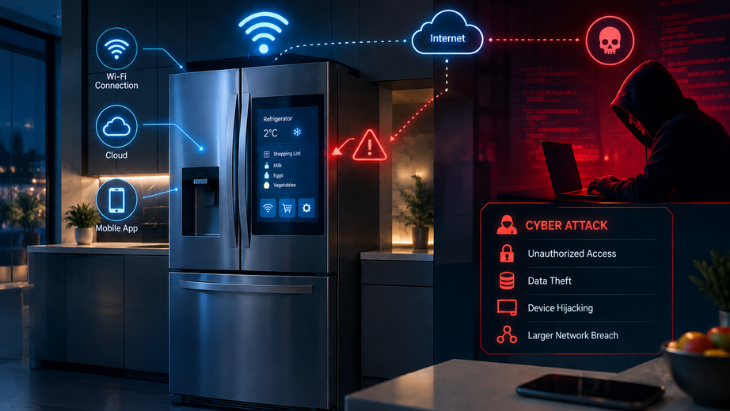
In October 2026, a cyberattack disrupted refrigeration systems at hundreds of supermarkets in France. Reports described attackers manipulating cooling controls, triggering defrost cycles, and causing temperatures to rise dramatically. The result was spoiled food, operational disruption, and significant financial losses.
The incident drew attention to refrigeration controllers manufactured by Danfoss, including systems used to manage commercial cooling infrastructure. These controllers are not ordinary appliances. They are connected operational technology (OT) devices responsible for maintaining conditions that businesses depend on every day. The attack also raised an uncomfortable question: how could systems designed to operate reliably for years become an entry point for attackers?
The warning signs were already there. In August 2026, cybersecurity researchers at Claroty published details of vulnerabilities affecting the Danfoss AK-SM 800A controller. The findings included weaknesses that could allow authentication bypass and, under certain conditions, remote code execution. Danfoss had addressed the reported vulnerabilities through firmware updates.
Although investigators have not publicly confirmed the exact method used in the supermarket attack, reports point to a combination of outdated software and management interfaces exposed to the internet. This is a familiar pattern in cybersecurity. An attacker does not always need a sophisticated exploit or a complex attack chain. Sometimes, an exposed management interface and an unpatched vulnerability are enough. The real lesson is that operational technology can only be as secure as the access paths used to manage it.
Why OT Access Is Different from Traditional IT Access
For many organizations, cybersecurity programs have historically focused on protecting endpoints, servers, cloud environments, and business applications. OT environments, however, introduce a different set of challenges.
Industrial controllers, building management systems, refrigeration equipment, and other connected devices often have long operational lifecycles. Replacing them can be expensive, while applying updates may require maintenance windows, compatibility testing, or coordination with equipment manufacturers.
At the same time, remote access is increasingly necessary. Engineers, maintenance teams, system integrators, and third-party service providers need to troubleshoot equipment and change configurations without always being physically present. That creates a difficult balance. Organizations need remote access to keep operations running, but unrestricted access to an operational controller can give an attacker the ability to disrupt the physical process itself.
Consider a refrigeration controller. An unauthorized user who gains administrative access may be able to change configuration settings or interfere with the operation of the cooling system. The consequences extend beyond an IT security incident to inventory loss, service disruption, safety concerns, and reputational damage.
The same principle applies to other OT environments. Unauthorized changes to a building management system can affect temperature and ventilation. Access to industrial control systems can disrupt production. Compromised network infrastructure can affect the availability of entire facilities. In these environments, privileged access is not just an identity management concern. It is part of operational risk management.
Where Privileged Access Management Makes a Difference
Privileged Access Management (PAM) helps organizations control who can access critical systems, how that access is granted, and what users can do once connected. For OT environments, the objective is straightforward: maintenance personnel should have the access they need to perform their work, but that access should not remain unrestricted or invisible.
Kron PAM addresses this challenge through several complementary capabilities.
Restrict Access to Management Interfaces:
Exposing OT device interfaces directly to the internet increases the risk of unauthorized access. Kron PAM's Privileged Session Manager provides controlled access to supported protocols, including HTTPS, SSH, and Telnet, allowing organizations to restrict who can connect to critical systems. Network segmentation and firewalls remain essential complementary controls.
Enable Secure Remote Access to OT Systems:
Kron PAM enables engineers and third-party maintenance providers to access supported OT/ICS systems remotely through controlled access paths. Authentication and authorization policies help ensure that users can reach only the systems they are permitted to manage, reducing exposure without disrupting essential maintenance activities.
Protect Privileged Credentials:
Kron PAM Password Vault centralizes privileged credential storage and controls access to administrator passwords. Where supported, automated password rotation further reduces the risks associated with shared or long-lived credentials.
Enforce MFA and Least Privilege:
Kron PAM supports Multi Factor Authentication (MFA), access policies, and approval workflows. Organizations can limit access to authorized users, specific systems, and approved maintenance activities, reducing unnecessary standing privileges.
Record Sessions and Improve Accountability:
Kron PAM Privileged Session Manager provides session recording and monitoring for supported protocols. These capabilities help security teams investigate suspicious activity, trace administrative access, and improve accountability for changes made to critical systems.
Secure Network Device Access Across OT and IT:
Kron PAM's Network PAM capabilities help control privileged access to network devices, while Privileged Session Manager secures access to supported servers and OT/ICS environments. This centralized approach helps organizations apply consistent access controls across multiple facilities and infrastructure environments.
These capabilities are especially important when third-party engineers or multiple internal teams share responsibility for maintaining OT infrastructure.
PAM Is One Layer of a Stronger OT Security Strategy
The Danfoss incident also highlights an important distinction: controlling access does not eliminate software vulnerabilities.
Organizations operating affected equipment must follow the manufacturer's security advisories, determine which devices and firmware versions are affected, and apply the recommended updates. Devices that have reached end of life may require additional isolation, compensating controls, or replacement planning.
A robust OT security program should combine several measures:
- Firmware and vulnerability management: Keep equipment updated and maintain an inventory of vulnerable or unsupported devices.
- Network segmentation: Restrict communication between corporate IT, OT, and external networks.
- Secure remote access: Avoid direct internet exposure of administrative interfaces and use controlled access paths.
- Privileged Access Management: Protect credentials, enforce authentication and authorization policies, and monitor administrative sessions.
- Monitoring and response: Investigate suspicious access, unexpected configuration changes, and abnormal operational behavior.
These measures address different parts of the problem. Firmware updates reduce known software weaknesses. Network controls limit reachability. PAM governs privileged access and improves accountability.
No single control can guarantee that an OT system will never be compromised. Together, however, these measures significantly improve an organization's ability to prevent unauthorized access and limit the impact of an incident.
From Protecting Accounts to Protecting Operations
The supermarket refrigeration incident is a reminder that cybersecurity failures can quickly become physical and financial problems. A compromised controller can mean more than unauthorized access to a device. It can mean spoiled inventory, disrupted services, emergency maintenance, and a loss of customer confidence.
For organizations operating connected industrial systems, securing privileged access should therefore be part of the operational resilience strategy—not an afterthought. Kron PAM helps organizations bring privileged access under control across human users, infrastructure, and OT environments. By combining credential protection, controlled remote sessions, stronger authentication, access policies, and activity monitoring, organizations can reduce the risk associated with administrative access to critical systems.
Because protecting operational technology is not only about keeping attackers out. It is also about ensuring that the people who need access can do their jobs securely, and that every privileged connection remains under control.















FAQ
OT systems control physical processes. Unauthorized access can disrupt production, damage equipment, spoil inventory, or affect the availability of essential services.
It can centralize access through supported privileged sessions, enforce access policies and MFA, protect credentials, and provide session monitoring and recording.
No. Credential management should be combined with least-privilege access, appropriate authentication, session monitoring, network segmentation, and timely security updates.
Generally, no. Administrative interfaces should be restricted to trusted management networks and accessed through appropriately secured remote-access mechanisms.
Assess their exposure and operational risk, restrict network access, apply available compensating controls, and plan migration or replacement where necessary.
Kron PAM governs who can access critical systems, protects privileged credentials, controls administrative sessions, and improves accountability for actions performed on those systems.