2026 Cybersecurity Predictions: Why Kron PAM and Kron DAM / DDM Sit at the Center
Gartner’s 2026 Planning Guide for Cybersecurity makes one message unmistakably clear: the center of gravity in cybersecurity is shifting toward identity, access, and data control. As geopolitical instability, AI-driven workflows, and hybrid infrastructures expand attack surfaces; organizations can no longer rely on perimeter defenses or fragmented tooling. Instead, resilience in 2026 will be determined by how well enterprises control privileged access and data usage across humans, machines, and AI systems. This is precisely where Privileged Access Management (PAM) and Database Activity Monitoring and Dynamic Data Masking (DAM / DDM) move from “important” to foundational.
Enhancing Secure Remote Access for IT and OT Environments
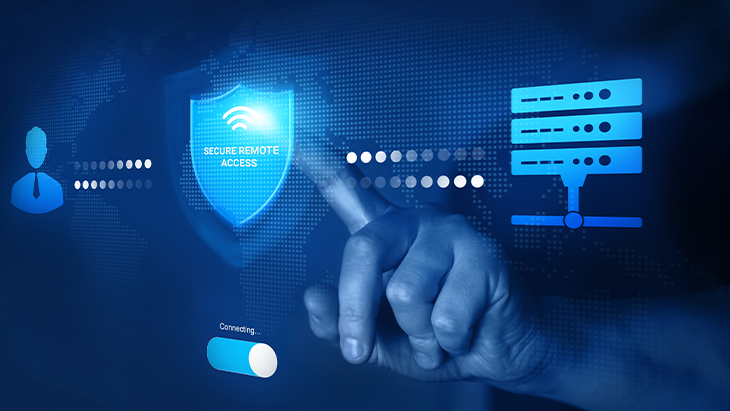
In today’s interconnected digital world, IT and OT systems increasingly require seamless yet secure remote access solutions. Traditional VPN-based methods, while prevalent, often fall short in meeting modern security and operational demands. This blog explores how Privileged Access Management (PAM) solutions can address these challenges with innovative approaches tailored for hybrid IT and OT environments.
Empowering Telco Security Compliance with Kron Network PAM Understanding the Telecommunications Security Act (TSA)
The Telecommunications Security Act (TSA) was established to strengthen the resilience and integrity of telecom networks. It mandates that service providers implement robust controls to prevent unauthorized access, safeguard customer data, and ensure operational continuity. For telcos, this means going beyond perimeter defenses — ensuring that every administrative and network access point is secured, monitored, and compliant with stringent standards. In essence, TSA shifts the focus from reactive security to proactive compliance, demanding greater visibility and accountability in how privileged access is managed.

How Kron Telemetry Pipeline Transforms Kubernetes Logging
Kubernetes is now the foundation of modern cloud-native platforms — microservices, CI/CD workflows, service meshes, API gateways, and distributed applications all run on it. But the more dynamic and scalable Kubernetes becomes, the more overwhelming its logs get. Every pod, container, sidecar, and node generates streams of data. Multiply this by autoscaling, rapid deployments, and distributed clusters, and organizations quickly find themselves drowning in logs they can’t efficiently store, analyze, or even route properly. This is exactly where Kron Telemetry Pipeline (Kron TLMP) brings clarity, cost control, and architectural simplicity.

Securing Industrial Operations: Kron PAM’s Next-Generation Solutions for OT and ICS
According to KuppingerCole’s 2025 Leadership Compass on Secure Remote Access for OT/ICS, the market is shifting rapidly from niche solutions to a core pillar of industrial cybersecurity. Secure Remote Access (SRA) has become essential for enabling real-time diagnostics, remote maintenance, and vendor collaboration — all while protecting systems never designed for exposure to modern cyber threats.